
Why Is High-Density Wool Felt Safe for Pets?
Wool has been used for centuries in clothing, blankets, rugs, and household objects. Natural, warm, and breathable, it also seems to have a particular appeal for many cats and dogs.
However, when researching whether wool is safe for pets, you may come across warnings about balls of yarn, knitting wool, or certain very soft wool balls.
These warnings are not about wool as a material. They mainly concern the ingestion of long, loose strands, which can pose a risk to an animal’s digestive system.
It is therefore essential to understand the difference between loose wool yarn and high-density industrial wool felt.
The Real Risk Comes From Loose Strings, Not Wool Itself
Veterinarians warn against the ingestion of string, ribbons, knitting yarn, dental floss, and other long, thin materials.
These objects are known as linear foreign bodies. When a cat swallows a strand, part of it can become caught under the tongue or in the stomach while the rest continues through the intestines. This can lead to serious digestive complications.
Cats are particularly vulnerable because the small, backward-facing papillae on their tongues can make it difficult to spit out a strand once it has entered their mouth.
The problem is therefore not that the object is made of wool. It is mainly its long, loose, and easily swallowed form.
For this reason, balls of yarn, knitting wool, ribbons, and strings should never be left within a pet’s reach without supervision.
High-Density Felt Is Very Different From Wool Yarn
Felt is not a textile woven from long threads.
To produce felt, wool fibers are first carded, then tightly entangled, felted, and compressed until they form a continuous material.
MATT™ signature felt is manufactured according to rigorous industrial standards. It stands out for its exceptional density, stability, and high tensile strength.
Its fibers are so tightly bound together that they do not release into long strands that could easily be pulled away or swallowed during normal use.
The MATT™ basket is also cut from a single sheet of structural felt. It contains no accessible stuffing, rope, string, or long loose fibers comparable to knitting yarn.
It is therefore important to distinguish between:
- a ball of yarn or loose wool thread;
- a carded or very soft material that can easily come apart;
- a woven textile that can fray;
- high-density industrial felt whose fibers are tightly entangled.
The risk associated with swallowing a loose strand should not be confused with the normal use of a basket made from a continuous sheet of compact, structural felt.
A Material Designed to Withstand Daily Use
The density of MATT™ felt allows it to retain its structure naturally while remaining slightly flexible and comfortable for pets.
Unlike woven textiles, felt does not contain warp or weft threads that can unravel. Its fibers are interlocked in every direction, creating a uniform and resistant surface.
Claws may eventually create a very light fuzz on the surface, which is normal for a natural fiber. However, this does not mean that the material is coming apart or releasing long strands.
The cashmere brush included with every basket makes it easy to remove loose surface fibers and pet hair while preserving the appearance of the felt.
This high tensile strength is precisely one of the reasons we selected an industrial-grade, high-density felt rather than a thinner or softer decorative felt.
Why Do Pets Seem Attracted to Wool?
Many cats and dogs naturally seem to seek out wool surfaces. Its texture, warmth, and animal origin may contribute to a familiar and comforting feeling.
The structure of wool fibers naturally traps small pockets of air. This allows the material to provide a warm surface without requiring thick synthetic padding.
Wool can also absorb and release moisture vapor, contributing to its breathability and comfort in different conditions.
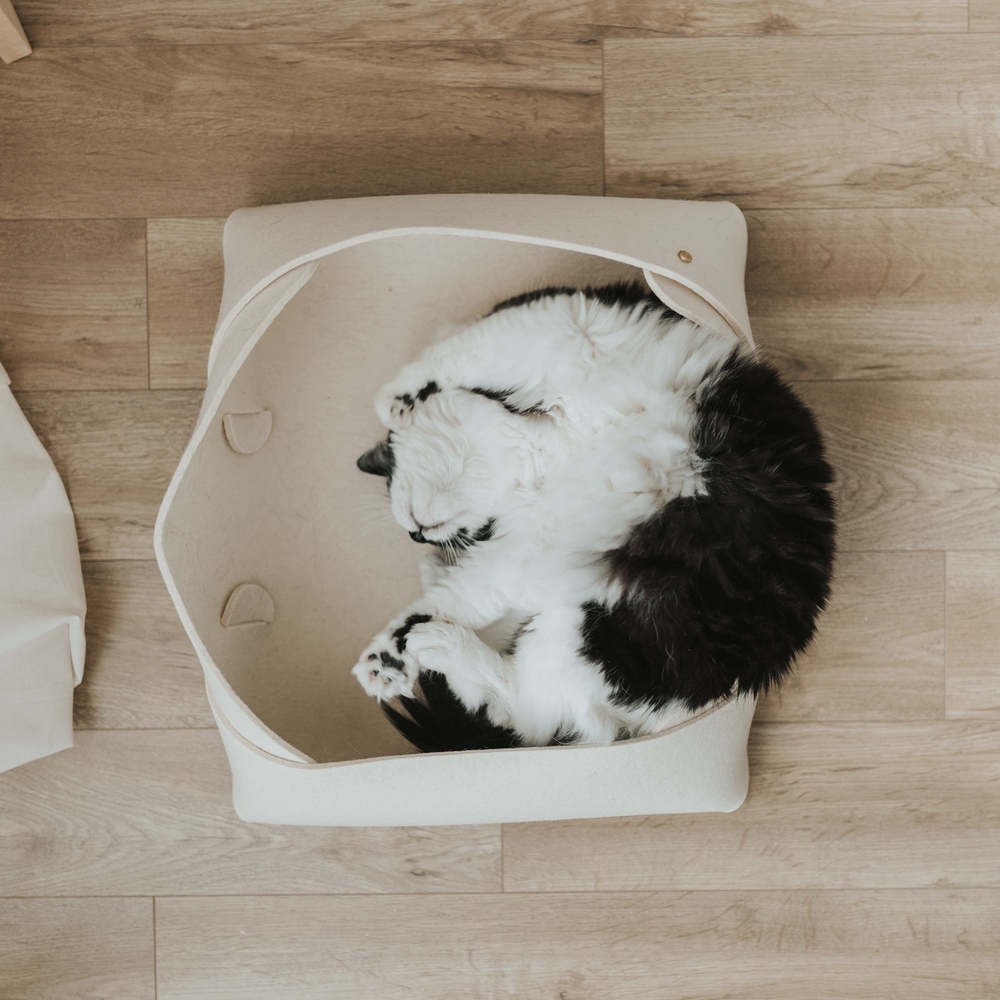
In a MATT™ basket, softly rounded corners and structured edges create a clearly defined space. Pets can curl up inside, lean against the sides, or settle into their preferred sleeping position.
The result is a resting place that feels stable, enclosing, and reassuring.
A Naturally Breathable and Temperature-Regulating Material
Wool is recognized for its natural ability to manage moisture and temperature fluctuations.
It can absorb moisture vapor while maintaining a relatively dry feeling at the surface. This helps create a comfortable resting environment throughout different seasons.
This temperature-regulating ability does not mean that wool generates heat. Rather, it helps reduce rapid temperature changes around the animal.
It can therefore feel warm when temperatures are cooler while remaining breathable as the surrounding environment becomes warmer.
Natural Resistance to Fire
The chemical structure of wool also gives it greater natural fire resistance than many untreated textiles.
Wool is more difficult to ignite than cotton or certain synthetic materials. When exposed to flame, it does not melt or produce drops of molten plastic the way some synthetic fibers can.
This does not mean that a wool product is fireproof. Rather, it is a natural property of the fiber that contributes to making wool particularly well suited to objects used in the home.
A Carefully Selected Material
The safety of a textile does not depend solely on the natural origin of its fibers. Manufacturing processes, dyes, and applied treatments must also be considered.
According to the technical information provided by our manufacturer, the felt used by MATT™ meets the human-ecological requirements of OEKO-TEX® STANDARD 100.
OEKO-TEX® STANDARD 100 applies to textiles tested for harmful substances, from yarns and fibers to finished textile products.
At MATT™, we selected our felt not only for its predominantly natural composition, but also for its density, stability, strength, and durability.
The material must be comfortable enough for pets to rest on while remaining structural enough to retain its shape over time.
Why Not Simply Use a Synthetic Pet Bed?
Many conventional pet beds are made with foam, synthetic fabrics, and accessible stuffing.
These materials can provide a very soft surface, but they may also lose their shape, retain odors, or require more frequent replacement.
The MATT™ basket takes a different approach.
It uses the structure of the felt itself to create the resting space. The material acts simultaneously as the comfortable surface, the sides, and the structure.
This design avoids unnecessary layers, bulky foam, and accessible synthetic stuffing.
It creates a simple, durable object suited to both the needs of the animal and the home.
A Design Inspired by Natural Behaviors
Cats often seek clearly defined spaces where they can rest while feeling protected.
This is one of the reasons they seem to enjoy boxes, baskets, and surfaces surrounded by small edges.
The MATT™ basket was designed from this observation.
Its rounded corners and gently raised sides create an enclosing shape without restricting the animal. The felt remains flexible enough to respond to movement while maintaining a stable structure.
It is therefore more than simply a surface to sleep on. The basket becomes a small personal space that feels reassuring and fits naturally into the animal’s everyday environment.
So, Is Wool Safe for Pets?
In the form of high-density industrial felt, wool is a stable and appropriate material for creating a resting space for cats and dogs.
The concerns sometimes found online mainly relate to balls of yarn, strings, and long loose strands that can be swallowed.
This risk should not be confused with a basket made from a continuous sheet of compact felt whose fibers are tightly entangled and possess high tensile strength.
In a MATT™ basket, the wool is not presented as loose yarn or accessible stuffing. It forms a dense, breathable, structural material designed to withstand everyday use.
It therefore creates a warm, stable, and reassuring space where pets can rest naturally.
Frequently Asked Questions
Is Wool Toxic to Cats?
The risks documented by veterinarians mainly concern the ingestion of yarn, string, and other foreign objects that can cause digestive obstruction. The danger comes from the form of the object and its ingestion, rather than from wool being used normally as a resting surface.
Why Are Balls of Yarn Not Recommended for Cats?
A ball of yarn can release long strands. Once a strand enters a cat’s mouth, it can be difficult to spit out because of the shape of the papillae on the tongue.
A high-density felt basket does not contain long loose strands and therefore does not behave like a ball of yarn.
Is Felt Woven?
No. Felt is not a woven textile.
The fibers are carded, tightly entangled, felted, and compressed until they form a continuous sheet. This manufacturing process explains its distinctive structure and high strength.
Can Claws Pull the Fibers Apart?
MATT™ signature felt is selected for its exceptionally high density and tensile strength.
Over time, claws may create a light fuzz on the surface, as can happen with many natural fibers, but they do not release long strands comparable to those found in woven textiles or balls of yarn.
Does the Basket Contain Stuffing?
The basket itself is cut from a single sheet of high-density felt and contains no accessible stuffing.
It can be used on its own or paired with a MATT™ cushion, depending on the animal’s resting preferences.
Why Is MATT™ Felt Denser Than Decorative Felt?
Our felt is manufactured according to industrial standards and selected for its stability, durability, and high tensile strength.
This density allows it to retain its structure while providing a slightly flexible and comfortable surface for everyday rest.